
When Everything Looks Fine But Feels Anything But
I was having a conversation with one of our Behavioral Breathwork facilitators recently.
She told me that she sees something that we also see all the time.
When life gets harder, health is usually the first thing people let go of.
I get it.
When everything feels like too much, the last thing you want is someone telling you to drink more water, sleep more, cut out coffee, and overhaul your lifestyle.
But here is what I kept coming back to.
As life gets harder, taking care of yourself needs to get easier.
Not more complicated.
I say that from experience.
When our girls were young, two moments in the day were the hardest.
The morning rush.
Getting everyone out the door, knowing something would derail it no matter how early I started.
And bedtime.
Trying to wind two small children down when I hadn't wound myself down once all day.

I was rushing everywhere. Always behind.
I even had recurring dreams about missing flights.
I spent years trying to fix it. Diets. Exercise. Cleanses.
Twenty years of self-development.
Doing everything I thought I was supposed to do.
I still didn't feel better.
I remember sitting around the fire one evening with Shane.
Exhausted. Upset. Miserable.
He looked at me and said:
"Have a look at your life. You have a husband who is here for you. Kids who sing and love you. A roof over your head. What have you got to be miserable about?"
It was not said to dismiss how I felt.
But he was right. I was struggling to appreciate what I had.
That was the part that did not make sense to me.
I wasn't struggling because my life was bad.
There was a gap between knowing what to do to feel better
and actually feeling better.
It wasn't until I understood how stress actually works in the body,
from a breathing and behavioral science perspective,
that it all made sense.
It was a relief to understand what was actually happening when I felt stressed.
That is what sits at the center of this week's newsletter.
Grateful to have you a part of our community,


Featured Insight of the Week...
Why Do I Lose My Temper So Easily? What Is Actually Happening
Most people think losing their temper is a willpower problem…
Try harder.
Be more patient.
Control yourself.
But it starts in the body before the mind even registers what is happening.
Here is what is actually going on…
Something triggers a shift in the physiology.
It does not have to be dramatic.
The kids won't put their shoes on...
You are going to be late...
You can't find your keys.
Something small stacks on top of everything else.
And the body responds before the mind does.
Breathing changes.
Carbon dioxide goes out of balance.
Something feels off.
This happens so quickly.
Then mind steps in.
It picks up the sensations.
Tension in the body. A racing heart. Tightness in the chest.
And it starts building a story.
Why is this happening?
Why can’t they just listen?
Why is everything so hard right now?
That story often amplifies what is already happening in the body.
And then we try to take control.
Of the situation.
Of the breath.
Of the outcome.
But that attempt at control can push the system further out of balance instead of allowing the body's natural regulation to settle.
By the time the reaction happens…
The body has already been under pressure for a while.
The reaction is the end of the process.
Not the beginning.
This is why willpower rarely changes anything in the moment.
The pattern is already running before awareness even catches up.
When I was rushing everywhere, always behind,
I was walking around in what breathing science calls a hypocapnic state. Not enough CO2 for oxygen to flow efficiently, which was putting my system under constant pressure.
No wonder small things felt bigger than they were.
The body was doing its job.
But the way I was breathing during stress was working against it.
What changes things is not adding another technique.
It is noticing what is happening earlier in this process.
The body already knows how to regulate.
It just needs enough space to do it.
Sometimes the difference between reacting and responding is noticing what is happening in the body a few seconds sooner.
That is the starting point.
I have broken down the full sequence step by step in this week’s blog.
This week in Behavioral Breathwork
This week I took a small group of our Behavioral Breathwork Facilitators through a masterclass called…
Your Complete Webinar Guide: Design It, Fill It, and Convert It.
We walked through how to design an entry-level experience that introduces your audience to your work, builds connection and trust, and naturally leads people toward your core program or offering.
Facilitators walked away with a step-by-step framework, email templates, and AI prompts to bring it all together without it taking weeks to pull off.
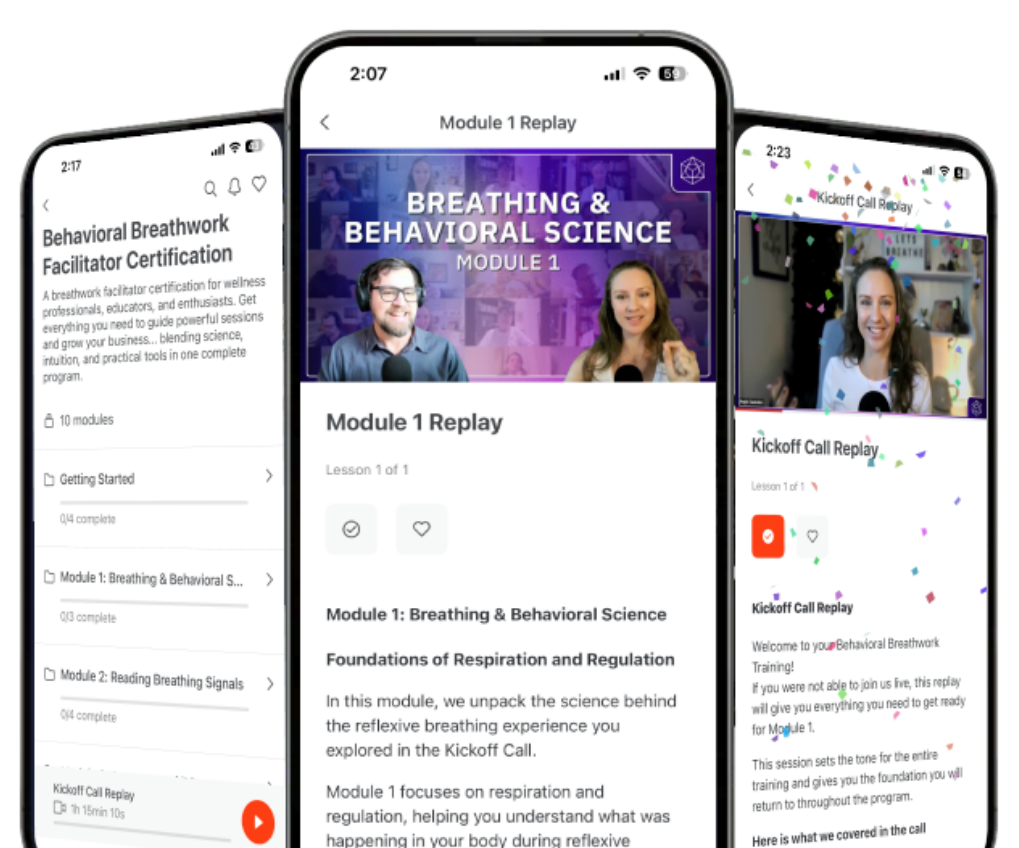
If you are a breathwork facilitator looking to grow your work or turn it into a business, we help you get started inside the Behavioral Breathwork Facilitator Certification Training.
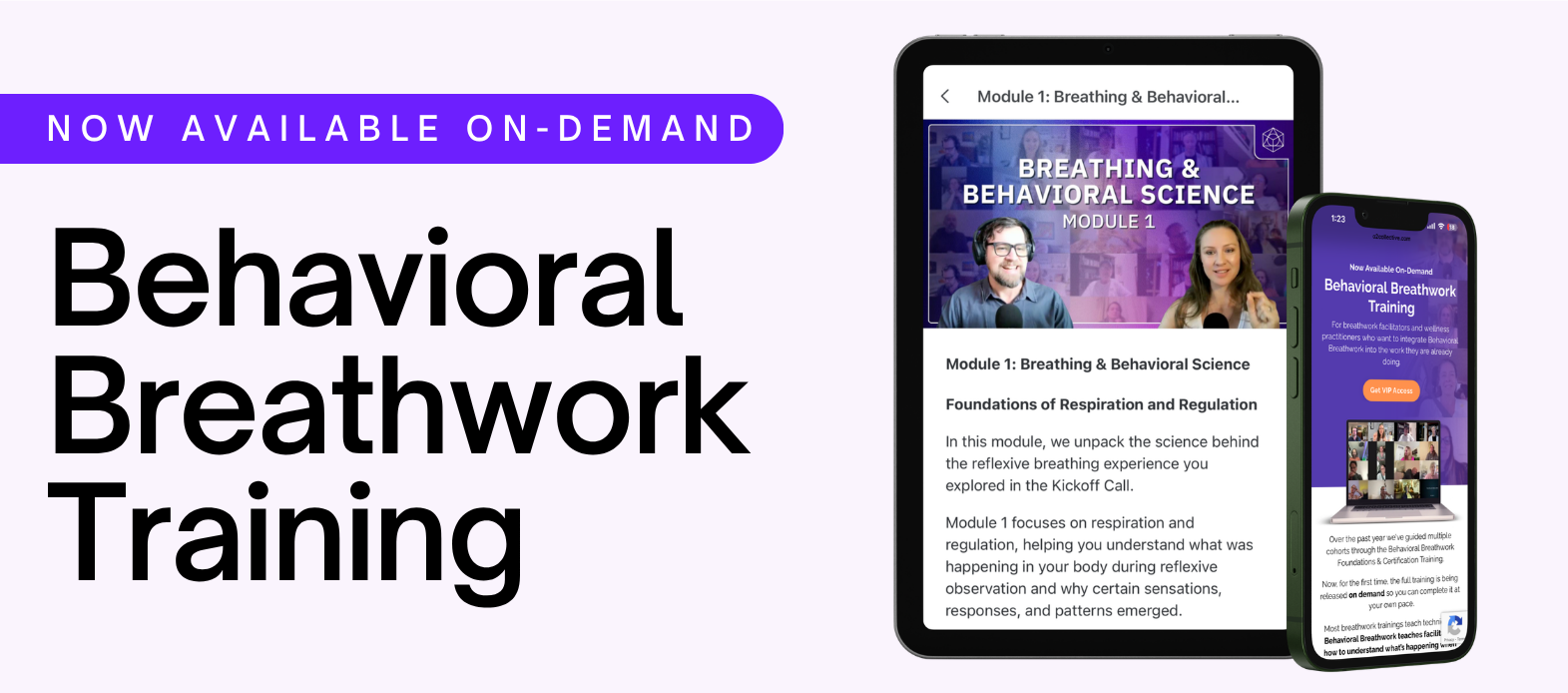
For the first time, we are releasing the Behavioral Breathwork Training on demand, so you can complete the program at your own pace.
To celebrate the release, anyone who purchases the on-demand training will receive a FREE VIP ticket to attend the live virtual Behavioral Breathwork training in May.
If you’d like to be notified when it’s available and receive your FREE ticket to attend.
NEW HERE?
Begin your personal journey
🔗 Start the Free 7-Day Experience
If you’d prefer to begin with a simple personal experience, you can start with our free 7-Day Reflexive Breathing Experience.
It’s a short guided exploration to help you notice how your own breathing patterns respond to stress and settling.
KEYNOTES, WORKSHOPS, & PODCASTS
🔗 Book Shane and/or Angie For Your Next Event
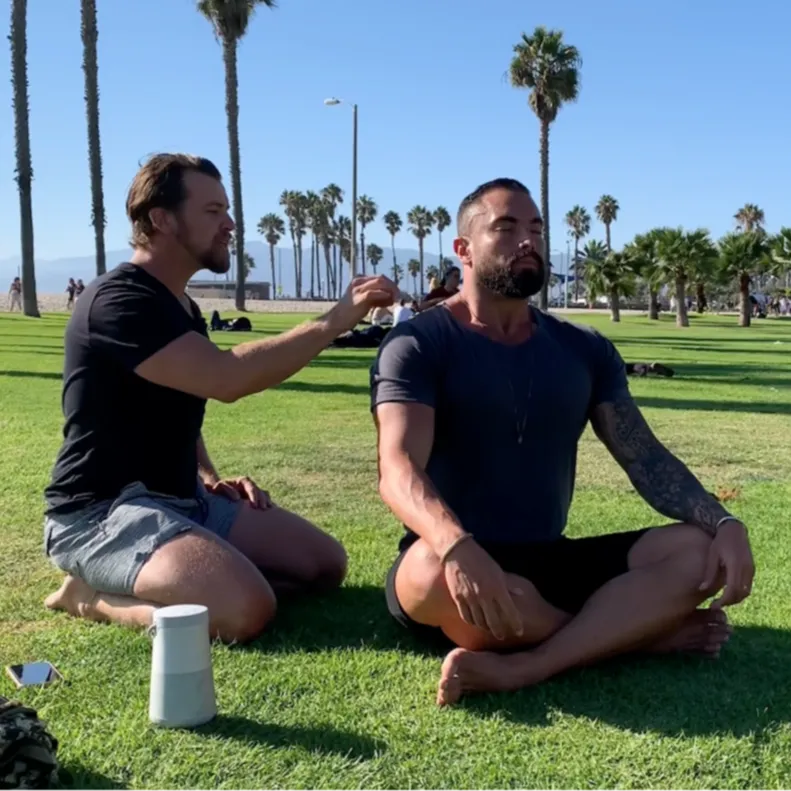
We offer workplace keynotes and trainings grounded in behavioral science and breathwork, helping teams understand how stress develops as a learned response and build practical regulation skills they can use immediately.


Missed a Newsletter? Catch Up Anytime!
If you’ve recently joined or just want to revisit past insights, tools, and breathing practices... we’ve got you covered!
👉 Browse All Our Previous Newsletters Here


Responses