
Sighs, Yawns, and the Stories They Tell
This week one of the participants in our Behavioral Breathwork Training shared an experience of sighing and yawning a lot from a recent breathing practice.
It took me back to a memory from five years ago.
We had just moved into this house.
I thought I was prepared, if not excited, for the chaos that comes with moving. I usually love it. The packing, the unpacking, the new space, the redecorating. All of it.
This one was different.
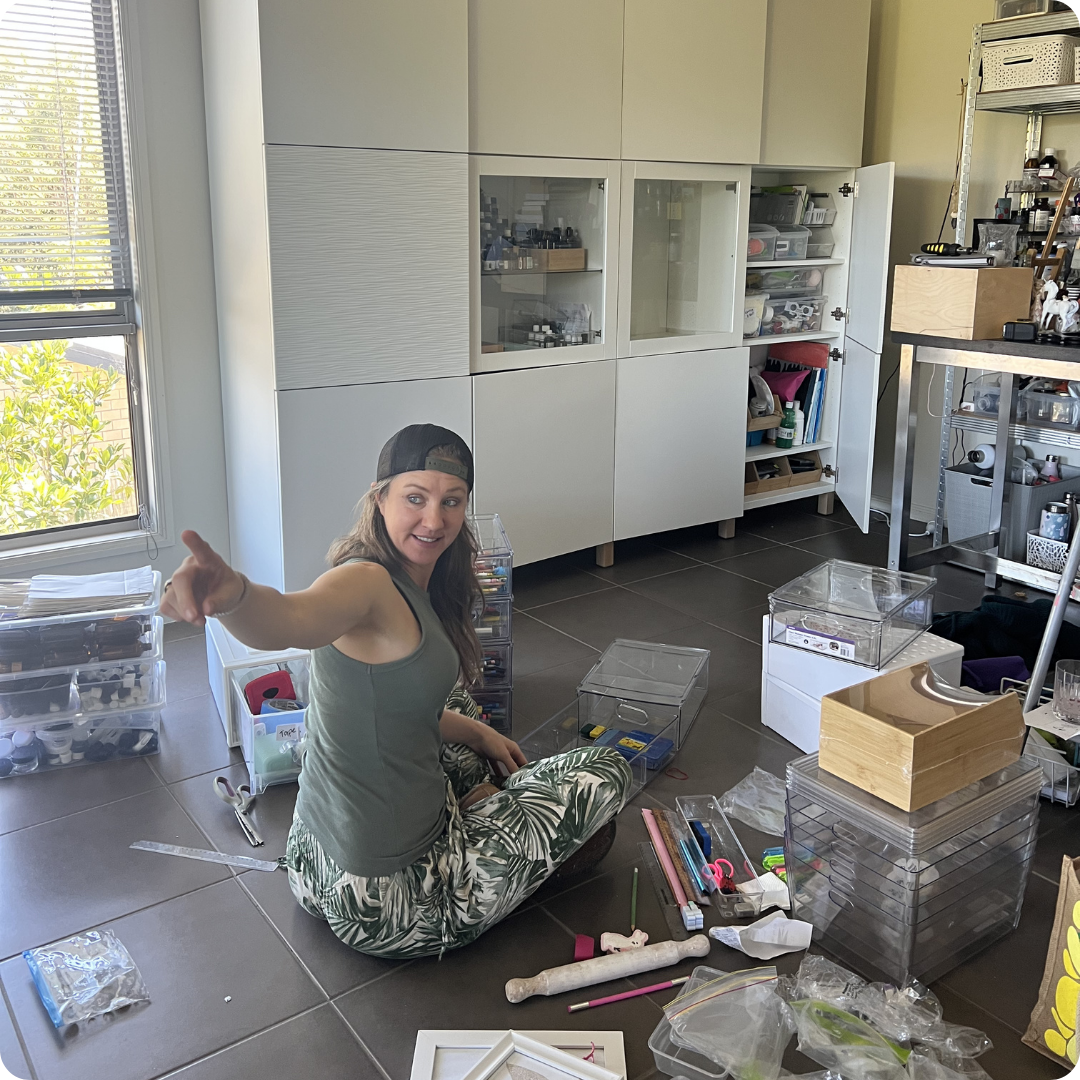
We booked and paid for a moving truck twice the size of what showed up. 😱 The driver said it was fine, he would just do a few trips instead of one. He tried to charge us for the extra trips. He damaged some of our things. He left.
We booked an end-of-lease cleaning company.
Paid up front for two people to do the full clean. One person showed up. Did half the job. Kept saying someone else was coming. No one came. They told us it was finished. Turns out the company was known for this. 😳
I took a week off work to redo what they hadn't done.
By the end of that week I was exhausted. I was also furious. Not because of the work, I don't mind cleaning...
It was the cost it had on us both financially and emotionally. It was the dishonesty. The lack of integrity.
That's the part that hit hardest. I tend to lose faith in humanity when people behave this way, and that loss sat heavy in my body.
There's a sadness underneath the frustration that I don't always have words for. I just don't understand how some people can outright do the wrong thing. I think you get the picture...
That whole week I was extremely challenged. Sighing constantly... Big, dramatic angry-sad sighs.
In my case, the sighs were what we call reflexive. It was the body responding to genuine stress, meeting the needs of the body.
The thing is, this is exactly the kind of experience that the body learns stressful breathing habits.
The body finds a pattern that works under stress and quietly continues in the background. A week becomes a month, becomes a year. The stress passes. The breathing habits get created, and the body continues a stressful pattern even after the stressful period has passed.
Without the awareness I have now, every time I would come back into this house, or clean it, or remember that week, my body could have run those same dramatic sighs. The stress would feel like it's not over even though it is. The breathing pattern would still be carrying the stress. And over time, that pattern would greatly influence my body chemistry, my health, and my wellbeing.
Which brings me back to the participant who started this thread…
Is sighing and yawning a sign of a problem?
The answer is… it depends.
And that sits at the center of this week's newsletter.
Grateful to have you part of this community,


Featured Insight of the Week...
Is sighing and yawning a sign of a problem?
The answer depends on whether the sigh is reflexive and led by the body,
or controlled, either consciously or unconsciously.
A reflexive sigh is one the body offers on its own.
It might be a response to a moment of stress.
It might be an expansion of the lungs after a period of breath holding.
It might be the body asking for a breath
after a period of controlled breathing.
It comes and then goes.
A controlled sigh is different.
It can be conscious. It can also be unconscious.
When it is unconscious,
it is a pattern the body has learned to run as a coping mechanism.
Often picked up during a period of stress and
quietly carried forward long after the stress is gone.
There are even some breathwork schools of thought
that teach the idea of ‘doubling down on nature’.
The assumption is that if the body offers an urge,
doing it bigger and more times is aligned with nature.
What we are discovering is that this is actually
a behavioral choice dressed up as following the body.
The reflex says sigh once.
Doing it multiple times can be a behavior, not always the reflex.
The same is true for yawning.
This is where behavioral breathing science introduces
a term worth understanding. Dysfunctional breathing.
In plain terms, it is a habituated overbreathing pattern.
The body has come to prefer a lower CO2 level than is healthy,
and it keeps itself there through unconscious patterns.
The body adjusts to whatever we repeat.
However we breathe unconsciously all day
becomes the level the body comes to expect.
If something brings CO2 closer to a healthy range,
the body may respond with a sigh or a yawn
to bring it back down to the level it has come to prefer.
Chronic sighing tends to show up in people who
control their breath in some way.
Unconscious breath holding. Bracing abdominal muscles.
Or overbreathing (also known as hyperventilation or breathing too much).
Awareness alone can start to change this.
No need to suppress a sigh or control a yawn.
Just notice whether a sigh feels reflexive,
or whether it feels like a controlled habit running in the background.
Each breath can be different from the one before.
The body knows the difference.
The mind can learn to recognize it.
We go into the full science of this on the blog,
including how the body comes to prefer a lower CO2 level,
and why the popular advice about sighing and yawning
is worth a closer look...
This week in Behavioral Breathwork
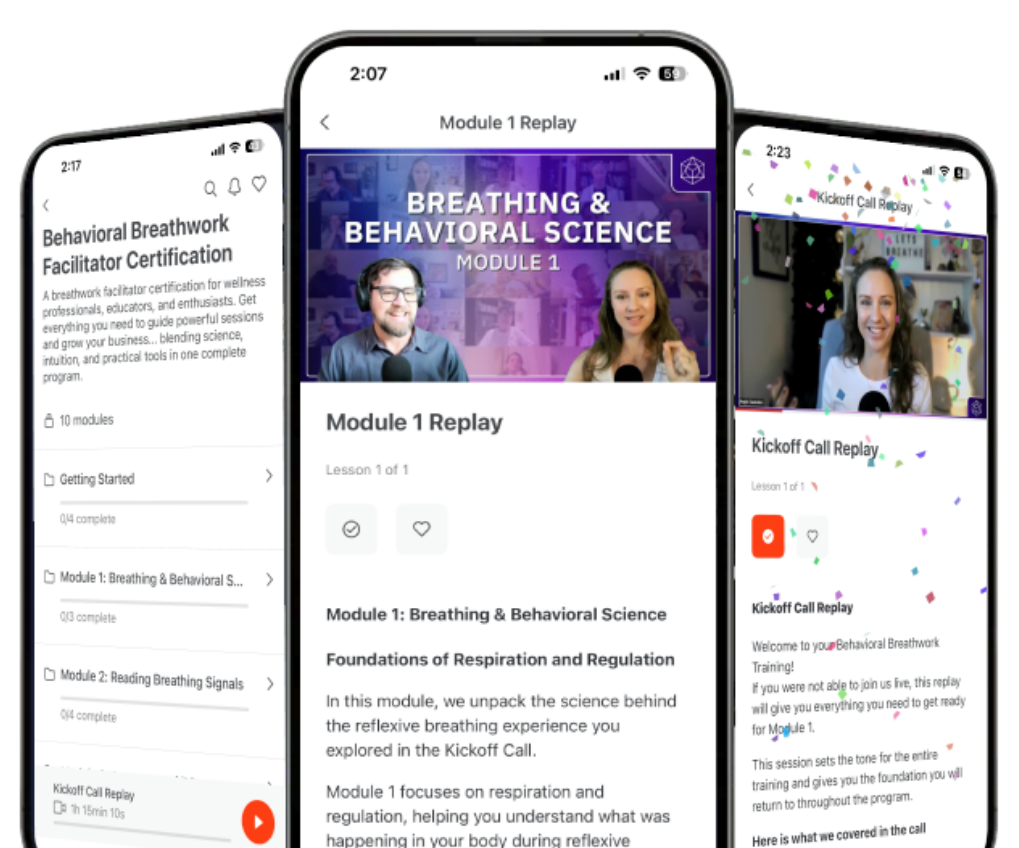
We released Module 1 of Behavioral Breathwork Training last week. Everyone is now learning the foundations of behavioral science and respiratory science.
The feedback coming through has been moving.
One participant shared this:
"Learning about hypocapnia and its possible symptoms felt less like hearing information and more like finally receiving language for experiences I have carried for years... this felt a bit like closure and gave understanding around what may have been going on all along."
Module 2 starts soon, where we move into how to use the body and movement to make room for the breathing reflex to do its job. 🙌🏼
If you'd still like to join us for this round, the doors are technically closed but we'd still love to welcome you in.
NEW HERE?
Begin your personal journey
🔗 Start the Free 7-Day Experience
If you’d prefer to begin with a simple personal experience, you can start with our free 7-Day Reflexive Breathing Experience.
It’s a short guided exploration to help you notice how your own breathing patterns respond to stress and settling.
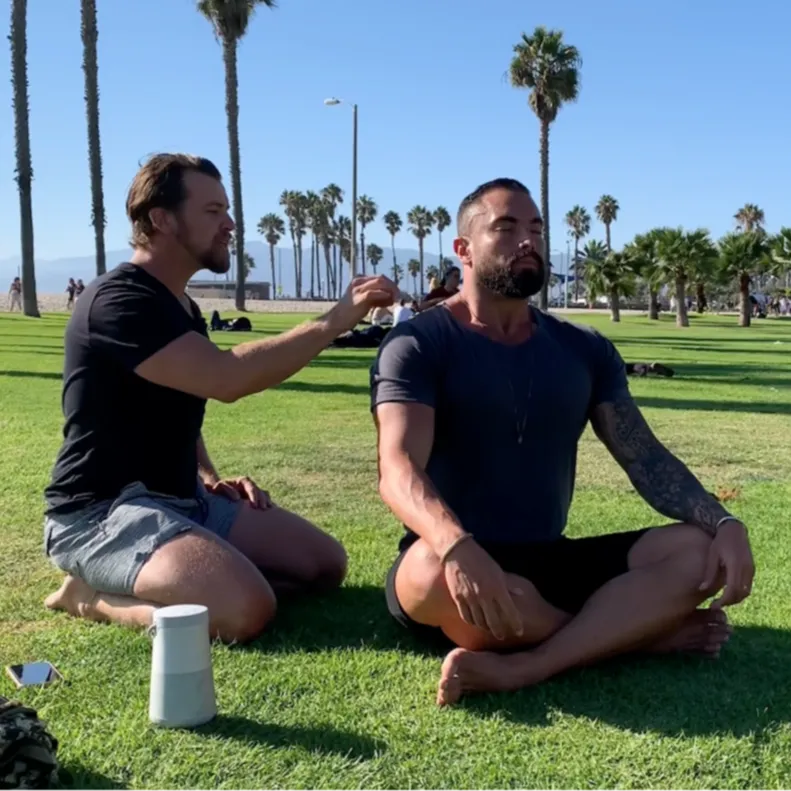
KEYNOTES, WORKSHOPS, & PODCASTS
🔗 Book Shane and/or Angie For Your Next Event
We offer workplace keynotes and trainings grounded in behavioral science and breathwork, helping teams understand how stress develops as a learned response and build practical regulation skills they can use immediately.


Missed a Newsletter? Catch Up Anytime!
If you’ve recently joined or just want to revisit past insights, tools, and breathing practices... we’ve got you covered!
👉 Browse All Our Previous Newsletters Here


Responses