
Our Research on Breathwork and Trauma Release
Earlier this week, we received an email from a breathwork facilitator who has been going through the Behavioral Breathwork Certification Training.
In one of the modules, Shane pushes back on a common claim in the breathwork world: the idea that breathwork releases trauma from the body.
The facilitator had a great question about that. He shared several research papers related to DMT, sigma-1 receptors, and trauma recovery that he felt supported the idea that intense breathwork practices may release trauma.
And to be fair, this belief exists across many breathwork traditions.
People have powerful experiences in breathwork sessions.
Experiences that feel emotional, meaningful, and sometimes life changing.
The conclusion many people reach is:
"That must have been trauma leaving my body."
It is an understandable interpretation, and one that I believed for a long time.
About nine years ago I had a breathwork session that felt like it went on for hours. I cried, yelled, laughed, and at times my whole body was trembling. By the end of it I felt exhausted but strangely calm.
Over the next few weeks I noticed something interesting.
I was less reactive with my young children.
I felt more connected with Shane.
Things that would normally trigger me simply did not trigger me the same way.
At the time, I believed something had been released from my body.
But the shift did not last forever.
Eventually the triggers returned. And when they did, I found myself searching for another breathwork session to recreate that same sense of release.
That raised an important question for me... If trauma had truly left the body, why did the reactions come back?
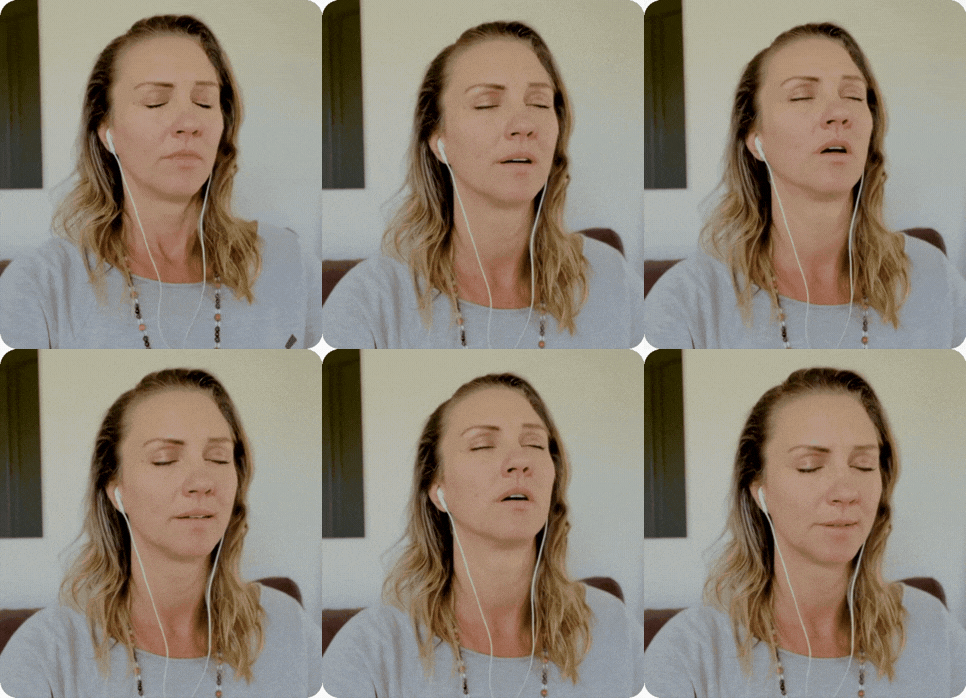
And why did I feel like I was constantly chasing another session, wondering if maybe I had not found the right technique yet, or worse, that something was wrong with me and I would have to live with my trauma forever.
As we continued researching behavioral science and breathing chemistry, I learned something important.
There is actually no clear scientific evidence showing that trauma is literally being released from the body during breathwork.
And interestingly, breathwork is not the only place where people experience emotional shifts like this.
People often finish a marathon, a CrossFit workout, or a very intense training session feeling emotionally lighter and calmer afterwards.
But those shifts do not necessarily last forever either.
So if powerful emotional releases can happen during breathwork…
and they can also happen during intense physical training…
What is actually happening?
That question sits at the center of this week's newsletter.


Featured Insight of the Week...
People Say Breathwork Releases Trauma. Is That Actually True?
The idea that breathwork releases trauma from the body is widely shared across many breathwork traditions.
But when we look at what we currently understand about respiratory physiology and breathing chemistry, a more evidence-based explanation becomes clear.
At this point in time, there is no clear scientific evidence showing that breathwork literally releases trauma from the body. It remains a hypothesis that has not been demonstrated in humans.
So what might actually be happening?
When breathing becomes intense during a breathwork session, it changes body chemistry.
Carbon dioxide levels shift, which affects blood chemistry, oxygen delivery, and blood flow to the brain.
This can create strong physical and emotional sensations.
Those experiences can feel meaningful, and sometimes even transformative, but they can also be intense or confronting depending on the person and the context.
The experience is real.
But how we explain it matters.
If someone feels better after a session, it’s easy to assume something has been released.
But that shift can also be explained by changes in breathing chemistry and physiological state.
This does not mean breathwork is not valuable.
But how we explain those experiences matters.
When facilitators understand breathing behavior and body chemistry,
they are better equipped to interpret what they are seeing and communicate it accurately.
This is one of the central goals of Behavioral Breathwork.
If you would like to explore the science behind this in more detail,
we have broken it down further in this week’s blog.
This week in Behavioral Breathwork
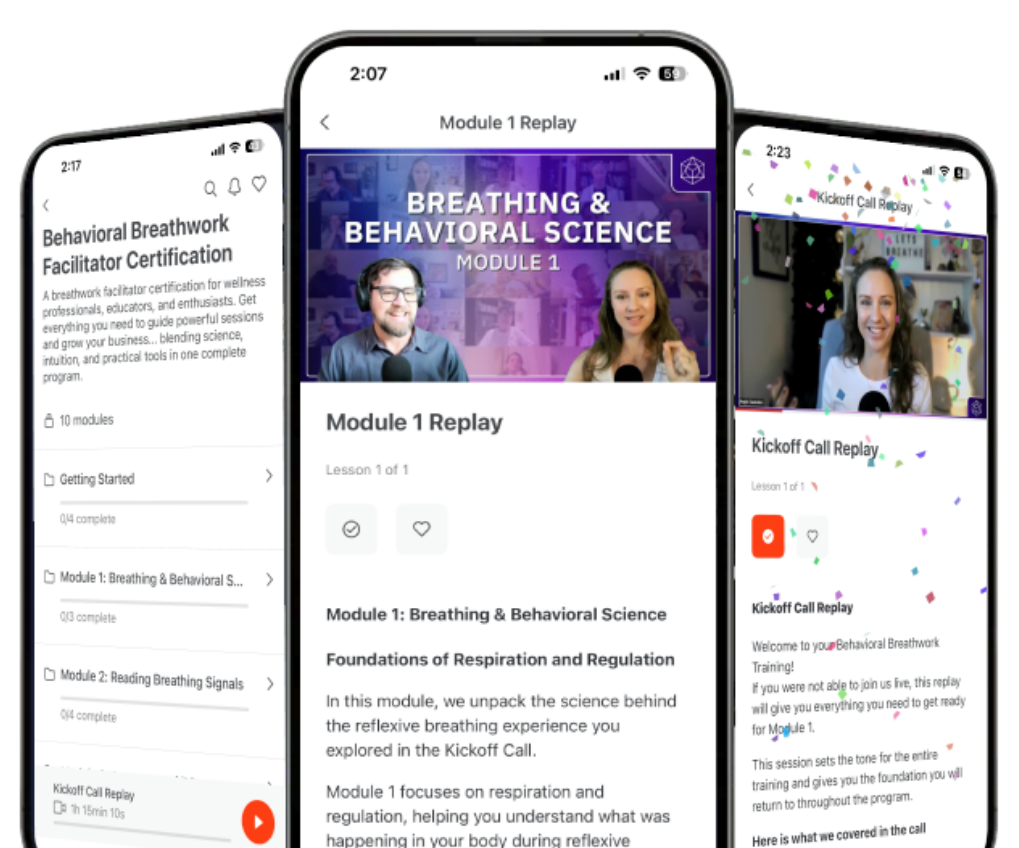
We’ve officially completed the Behavioral Breathwork Certification and have started issuing certificates to our current group of facilitators.
We’ve also introduced new training badges for both Foundations and Certification levels.
If you’d like to be part of the next intake, we’re preparing a special release where you can get started on the course now and join us for the live training in May.
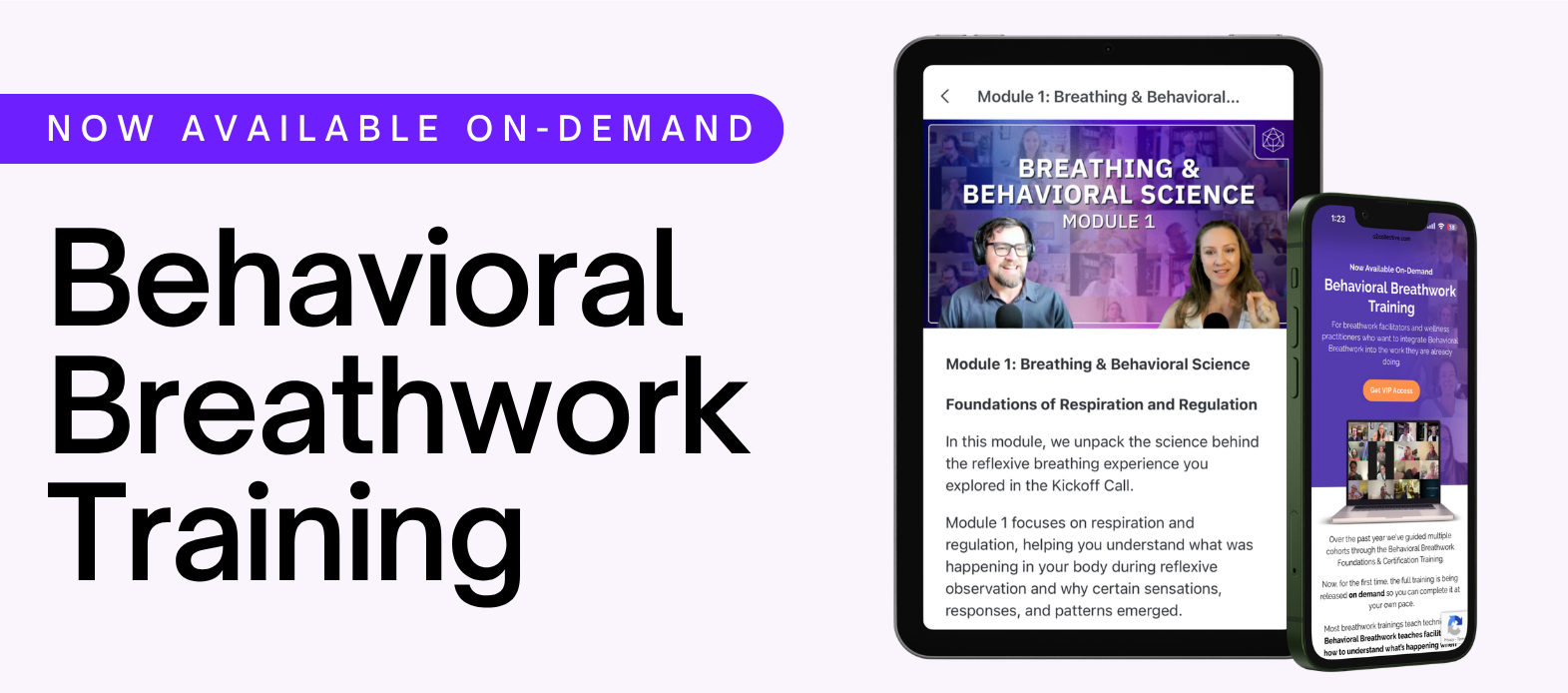
If this conversation speaks to you,
explore our Behavioral Breathwork Training!
We teach the behavioral science behind breathing as a learned experience so you can understand how to work with it and regulate through real life.
NEW HERE?
Begin your personal journey
🔗 Start the Free 7-Day Experience
If you’d prefer to begin with a simple personal experience, you can start with our free 7-Day Reflexive Breathing Experience.
It’s a short guided exploration to help you notice how your own breathing patterns respond to stress and settling.
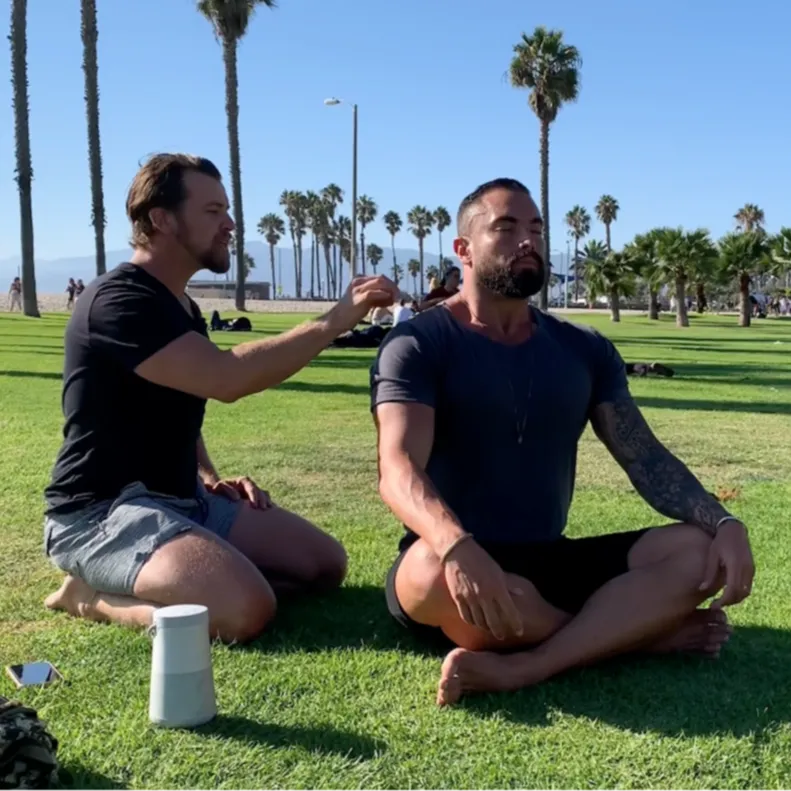
KEYNOTES, WORKSHOPS, & PODCASTS
🔗 Book Shane and/or Angie For Your Next Event
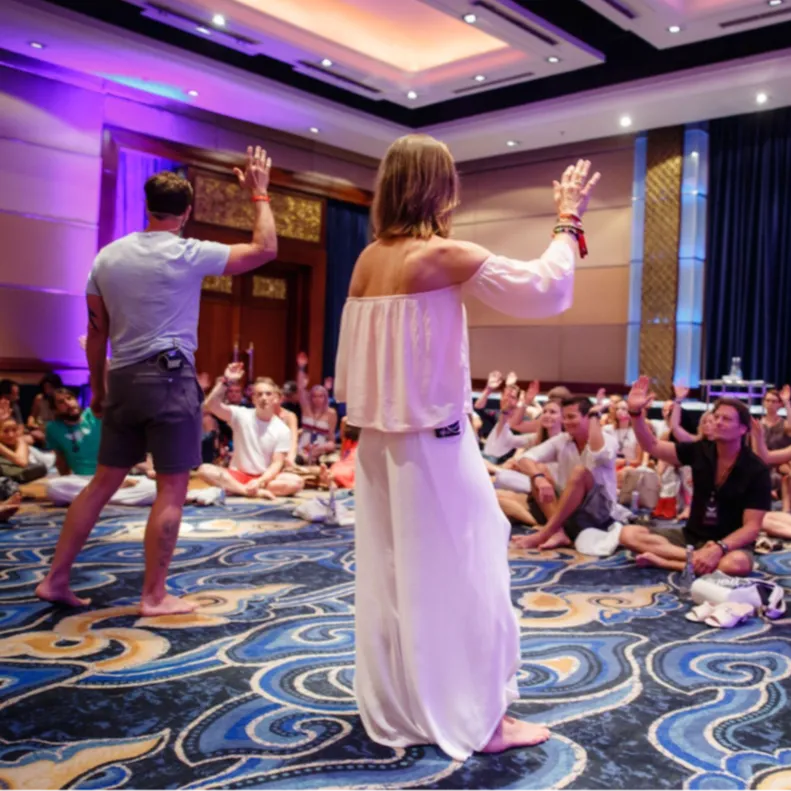
We offer workplace keynotes and trainings grounded in behavioral science and breathwork, helping teams understand how stress develops as a learned response and build practical regulation skills they can use immediately.

Missed a Newsletter? Catch Up Anytime!
If you’ve recently joined or just want to revisit past insights, tools, and breathing practices... we’ve got you covered!
👉 Browse All Our Previous Newsletters Here


Responses