
Personal Story: The Coping Strategy I Didn't Know I Had
A few weeks ago, Dr. Peter Litchfield and I were on a call together talking about what we keep seeing in the breathwork space.
The same patterns would keep showing up.
Someone discovers breathwork and it genuinely helps them.
They love the feeling so much that they keep coming back to it, over and over.
For a while it works beautifully…
Then the body adapts and it doesn’t really work the way it used to.
This is why techniques work well short term but not long term.
It's a bit like coffee. The first cup is transformational. Over time you need more just to feel normal. And when things start feeling flat or foggy, the last thing you'd suspect is the very thing that was used to help you.
That's when I started searching for more techniques... something else that might help.
Peter and I have seen this so many times now that it doesn't surprise us anymore.
It's actually quite common.
What's happening is that most breathwork techniques involve some degree of rigorous breathing that we call overbreathing.
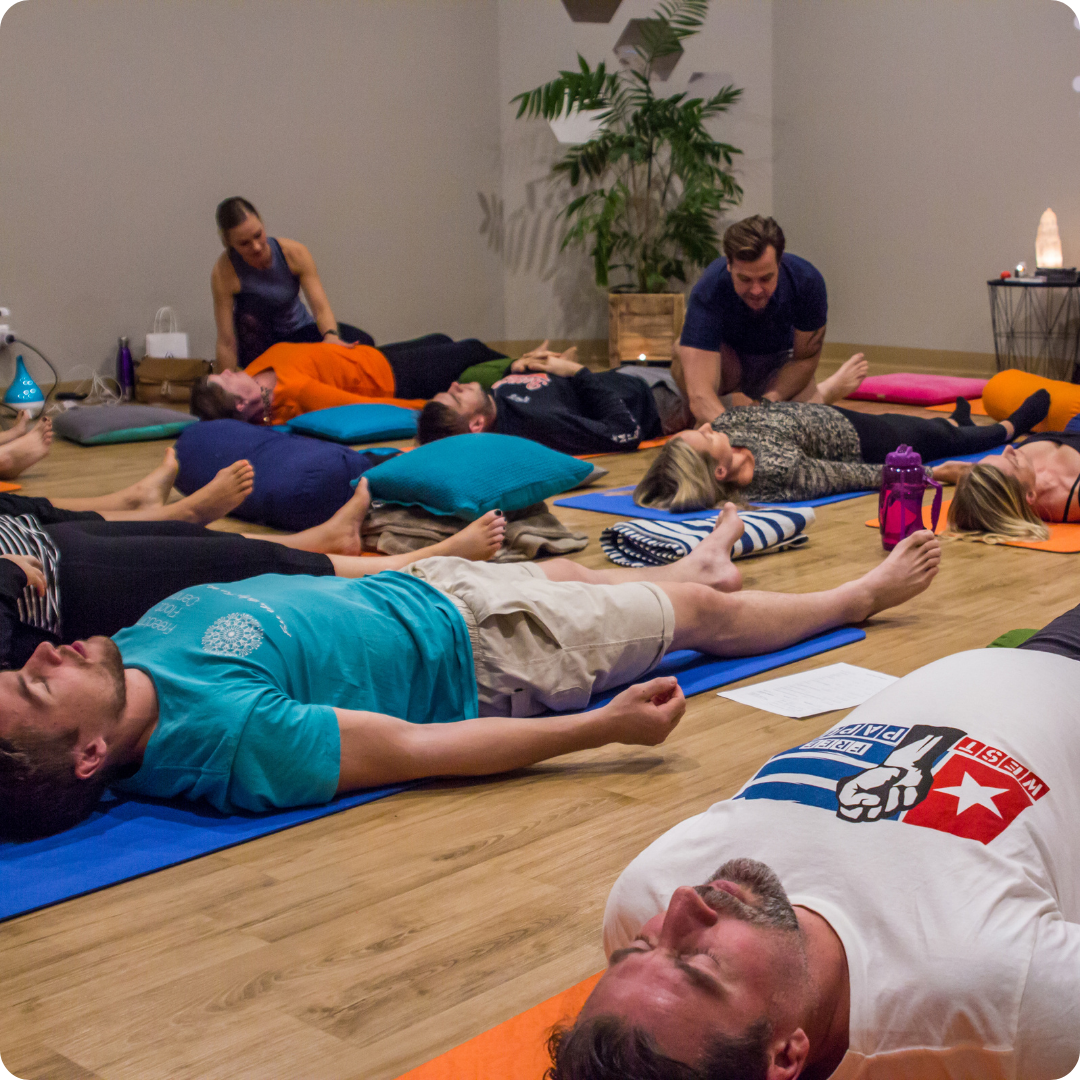
It's controlled, rhythmic, and it drops CO2. When CO2 drops, blood flow to the brain reduces and oxygen delivery is impaired.
In that state, the mind goes quiet.
The noise stops.
It feels like a break from oneself.
For someone who lives inside a very loud head, that feeling is extraordinary.
This is usually when people begin chasing that feeling regularly.
I'm very familiar with this…
Once I saw it in myself, I started noticing it in everyone we were working with.
When the kids were small… life felt relentless, we were just starting a business, there were money pressures, I felt like it was difficult just trying to hold everything together.
I developed what I called my angry breathing strategy.
When the feelings built up to a point I couldn't handle,
I would go and breathe hard until something released.
Until I cried.
Until the pressure released.
It worked every time.
It wasn't until I sat with Dr. Peter Litchfield over Zoom, a cannula in my nose measuring my CO2 in real time, that I finally saw exactly what was happening.
Peter asked me to do my breathing technique I usually use and what happened next confronted me.
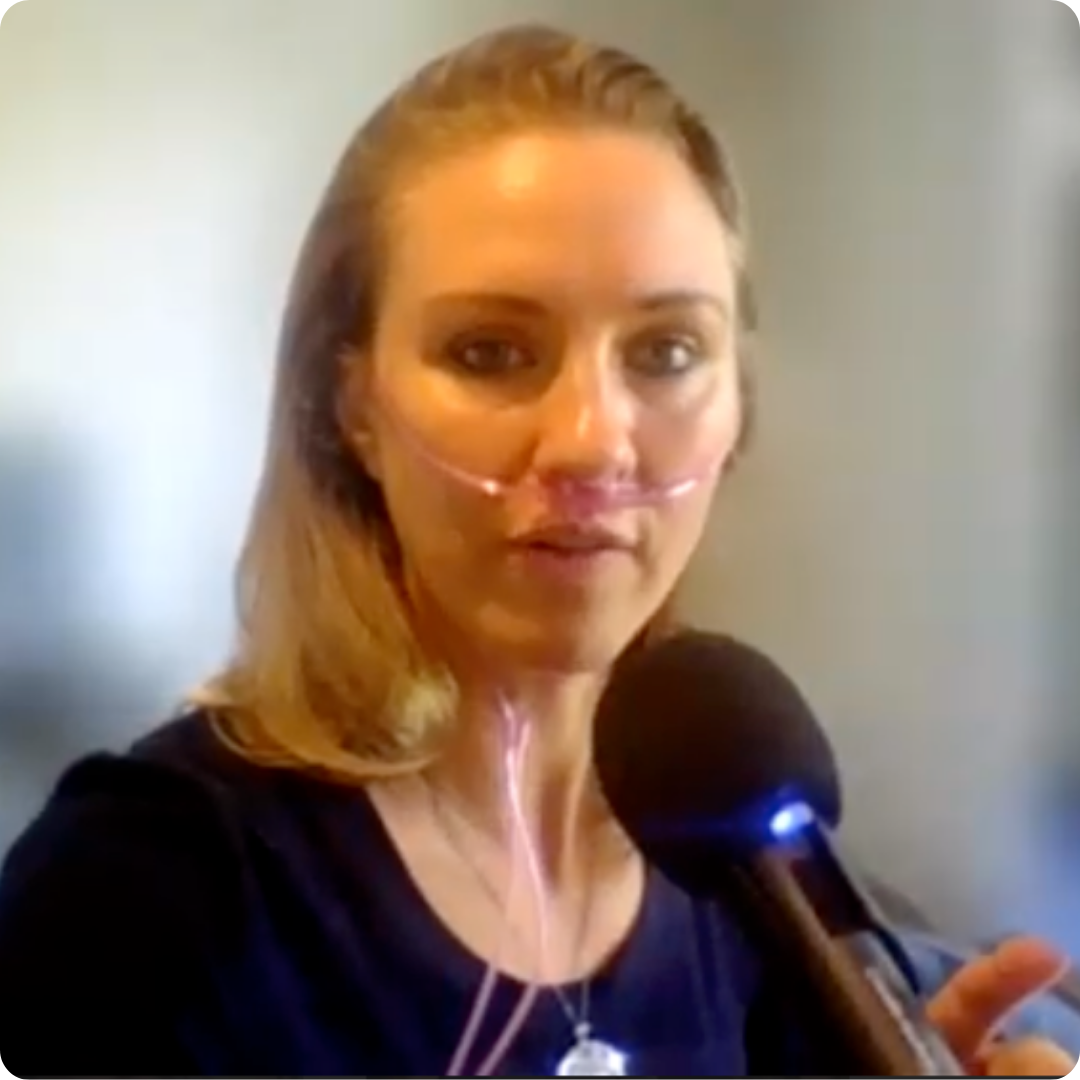
My CO2, already moderately hypocapnic, dropped to severely hypocapnic right in front of our whole class.
Peter said it straight: "The technique is serving you, but what it's doing is taking you into severe hypocapnia and you are dissociating."
He was right.
The dissociation was the point.
It was the only thing that gave me a break from the stress and from the need to control everything, including my breath.
"Hypocapnia was serving her," Peter said to the group.
Over time, without realizing it, I had built that pattern into my everyday unconscious breathing.
Chronically low CO2.
Chronically foggy.
Tired for no reason.
Moody in a way I couldn't explain.
The coping strategy had become a habit.
The habit had become the problem.
That sits right at the center of this week's newsletter.
Grateful to have you part of our community.


Featured Insight of the Week...
Does Breathwork Cause Dissociation?
The short answer is: it can.
But the more useful answer is understanding why,
and what that means for the people practicing breathwork.
Dissociation is a documented symptom of hypocapnia.
It sits alongside dizziness, disorientation, confusion, and state change
on the list of what happens when CO2 drops low enough.
It is more of a chemistry event than it is a spiritual phenomenon.
The brain requires a precise balance of CO2
to maintain healthy blood flow and oxygen delivery.
When CO2 drops, blood vessels in the brain constrict.
Oxygen delivery is impaired. Consciousness shifts.
That shift can feel like peace. It can feel like a release.
It can feel like finally getting out of your own head.
For many people,
it is genuinely the first time they have experienced that.
What Behavioral Breathwork helps us understand is…
the difference between an acute event and a chronic habit.
A single session that temporarily lowers CO2 is one thing.
A body that has learned to stay in that state all day, every day, is another.
The breathing reflex exists to regulate CO2 chemistry
moment to moment, automatically, without interference.
When overbreathing becomes a habit,
that reflex is being chronically overridden.
The regulation system the body relies on is no longer functioning freely.
Behavioral Breathwork, based on the work of Dr. Peter Litchfield,
draws a clear distinction between self-intervention and self-regulation.
Self-intervention is doing something to the breath to produce a desired state.
It can serve a purpose in the short term.
Self-regulation is the body managing its own chemistry on its own terms,
without being overridden. That is what the reflex is designed to do.
That is the goal.
The question Behavioral Breathwork asks is not how to breathe better.
It is: what has the body learned, and why does it keep doing it?
When people begin to understand their breathing habits at that level,
something shifts.
The technique was never the real issue.
Understanding what the body learned to do…
and why it keeps doing it,
is where everything changes.
If you want to explore the science behind this further, I expand on it in this week's blog.
This week in Behavioral Breathwork
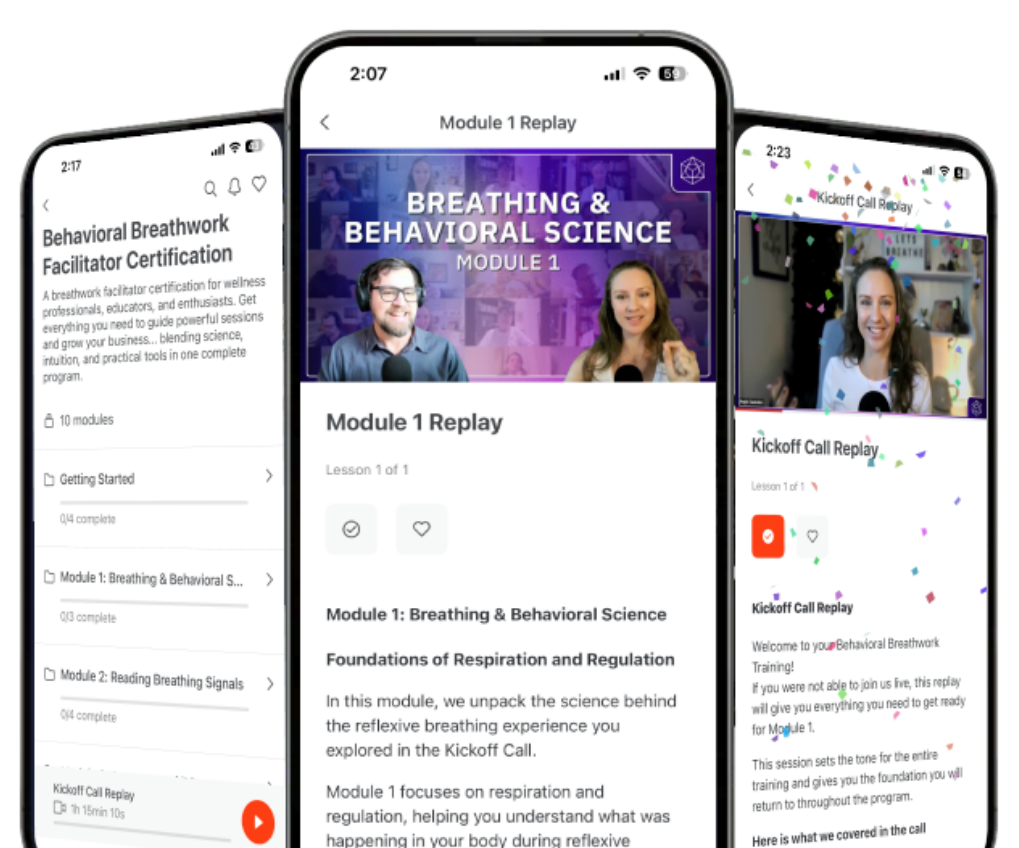
We opened enrollment this week and we are honored that people are already joining.
If you work in breathwork, health, wellness, or any field where you support people through their nervous systems, this training belongs on your continuing education list.
This will change how you understand what is actually happening in the body when people breathe, especially when they are stressed. And that changes everything about how we approach health and wellness.
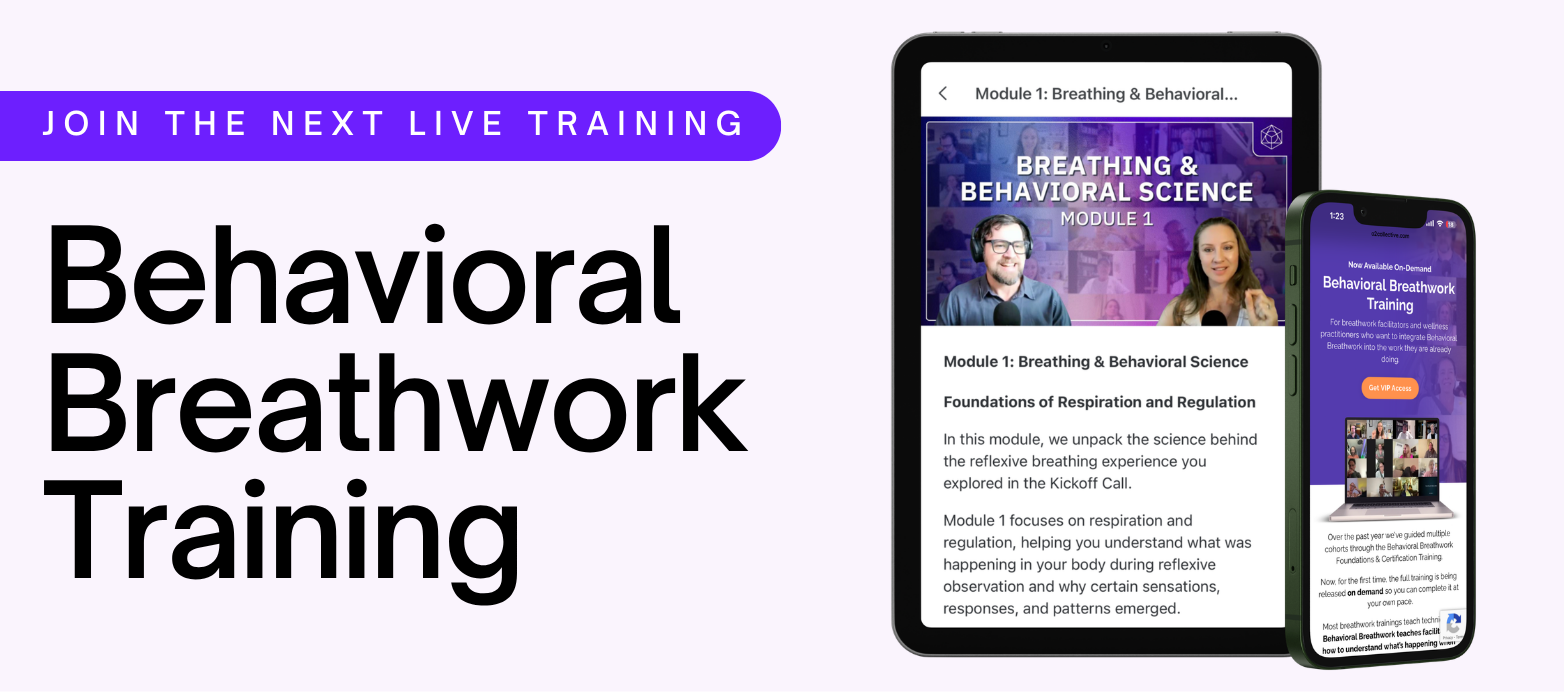
This is the only live cohort we are running this year.
If learning and connecting live matters to you.
If being part of a community as you move through the course matters to you.
This is your only opportunity to do that this year.
If you want to see what this work looks like before you commit, join us for a FREE Webinar.
When Breathwork Backfires: An Introduction to Behavioral Breathwork with Angie & Shane Saunders on May 7 at 6am Brisbane (AEST).
An introduction to the behavioral breathwork approach. What it is, why it works differently, and what it means for you and the people you work with.
NEW HERE?
Begin your personal journey
🔗 Start the Free 7-Day Experience
If you’d prefer to begin with a simple personal experience, you can start with our free 7-Day Reflexive Breathing Experience.
It’s a short guided exploration to help you notice how your own breathing patterns respond to stress and settling.
KEYNOTES, WORKSHOPS, & PODCASTS
🔗 Book Shane and/or Angie For Your Next Event
We offer workplace keynotes and trainings grounded in behavioral science and breathwork, helping teams understand how stress develops as a learned response and build practical regulation skills they can use immediately.

Missed a Newsletter? Catch Up Anytime!
If you’ve recently joined or just want to revisit past insights, tools, and breathing practices... we’ve got you covered!
👉 Browse All Our Previous Newsletters Here


Responses