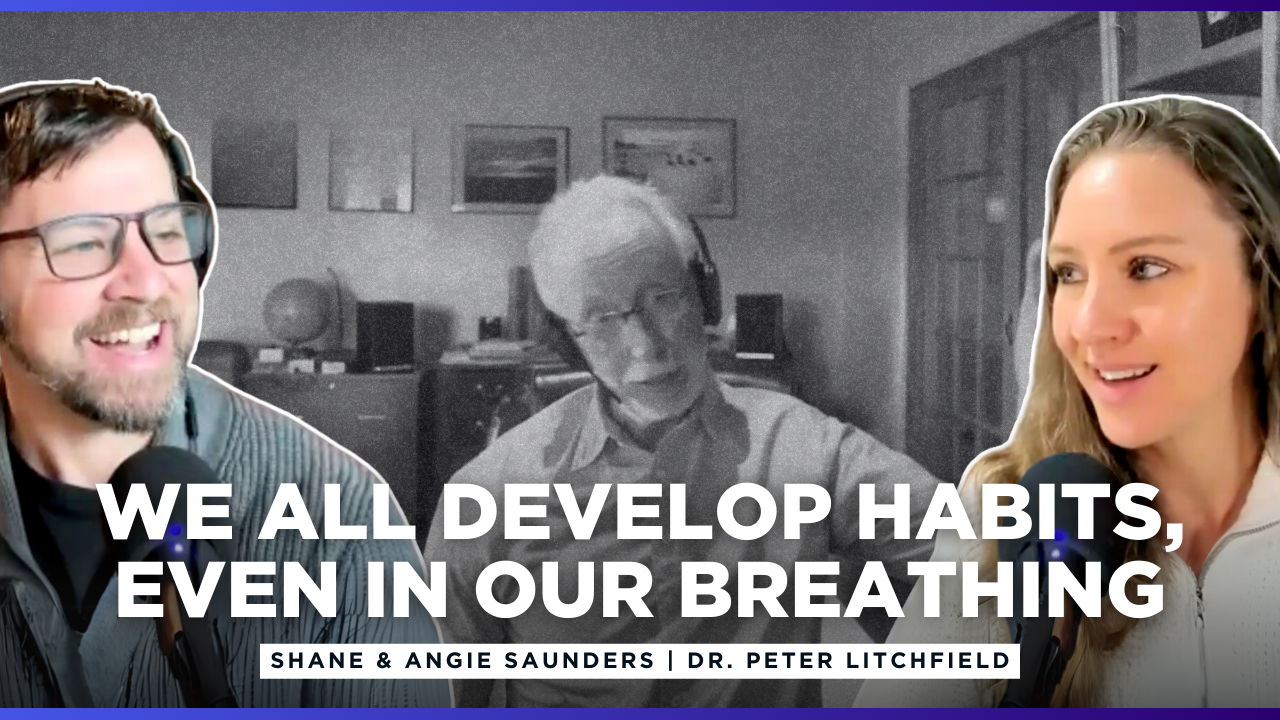
We All Develop Habits, Even In Our Breathing
Could “Baby Brain” Actually Be a Breathing Habit!?
We view breathing as a powerful metaphor — your breathing habits reveal exactly what needs attention in both your physiology and psychology.
During pregnancy, the growing baby puts enormous pressure on the diaphragm. Most women unconsciously develop the habit of “reaching” or gasping for extra air, especially in the later months.
After giving birth, that habit often remains. Years later, whenever life feels stressful — a toddler tantrums, arguments with a partner — the body remembers the pregnancy pattern and she starts reaching for air again.
This chronic over-breathing disrupts natural reflexes and reduces oxygen delivery to the brain. Suddenly she feels dizzy, disoriented, forgets mid-sentence, and can’t hold a clear conversation… and everyone just calls it “baby brain.”
Before pregnancy she may have handled heated discussions with ease. Now, with lower brain oxygen, it feels impossible (and yes, low oxygen also affects things like libido and orgasm — but that’s another post).
In the meantime, it would greatly benefit every mom to learn about the most important part of breathing.
No wonder so many women (and their families) struggle for years after having children.
ON-DEMAND NOW AVAILABLE!
Behavioral Breathwork Training On-Demand
Learn how to understand breathing behavior in real time and guide it with clarity. This on-demand training gives you a practical, physiology-informed framework you can apply in your own practice and with clients.
SUBSCRIBE NOW!
Online Breathing Academy Newsletter
Join our newsletter for thoughtful conversations about Behavioral Breathwork, regulation, and how stress develops as a learned response.
This is where we share more context, more nuance, and the reflections that don’t always make it online.
We won't share your details. Unsubscribe at any time.