
When I Stopped Searching Outside Myself
This time last year, I was highly stressed.
I was desperately searching for answers.
I wanted to run away from my problems because I didn’t have any solutions.
It just felt all too hard.
I kept looking outside myself.
For the right book.
The right mentor.
The right strategy.
But the harder I searched, the louder everything felt inside.
I was frustrated.
My anxiety was building.
Then I did what we teach.
I stopped looking for answers.
I focused on recovery.
I stepped away from the stress.
I stopped trying to control everything, including my breathing.
I allowed my body to settle into its own rhythm.

That is when the ideas started streaming in. I felt inspired again.
This is actually what led to the creation of our first Behavioral Breathwork Training last year.
It has happened to me over and over again.
When I am not feeling great, I take a break and allow the physiology to settle.
When the body chemistry balances, perception begins to shift.
The nervous system is no longer sounding alarm bells, and it becomes easier to hear wisdom.
I learned that creativity and innovation require the ability to self-regulate through stressful times.
Finding answers did not come from trying harder.
It came from allowing myself to balance out.
And this week, we saw that same principle come up inside our Behavioral Breathwork Facilitator Training.
That conversation sits at the center of this week’s newsletter.
Grateful to have you a part of our community,


Featured Insight of the Week...
Does Breathwork Have to Be Intense to Be Effective?
What we have found time and time again, and what our facilitators are now discovering as well, is this:
When you force intensity in a breathwork session, it can backfire.
Many people are so disconnected from their physiology that intensity potentially feel like progress.
For some, it feels confronting and overwhelming.
They leave confused or never want to do it again.
For others, it feels like a spiritual breakthrough.
Something powerful and expansive.
And that experience can become addictive.
But over time, the body adapts.
What once felt profound… becomes familiar.
And the intensity has to increase somewhere else to create the same effect.
In short, intensity does not automatically mean it’s good for you.
Sometimes intense breathing can serve a purpose.
Sometimes it pushes the system further out of balance.
In our experience, subtle shifts in breathing that restore balanced respiration tend to produce more sustainable results.
This is why we teach reflexive breathing first.
One of our facilitators described it beautifully this week.
He said “reflexive breathing feels like base camp”.
Before you climb higher, you stabilize.
For us, it’s less about being performative and more about being effective.
We’re not against intensity. We just don’t believe it should be the starting point.
Because at the end of the day, it’s hard to access wisdom when the body is screaming.
When breathing settles and physiology stabilizes, innovative thinking becomes more accessible.
If you’d like to explore the physiology and behavioral science behind this more deeply, we expand on it in this week’s blog.
This week in Behavioral Breathwork
Wisdom Comes Through Subtle Practices
In our group session this week, the word wisdom came up.
Not in a mystical way.
In a very practical way.
One of our facilitators shared:
“There’s something about just sitting with the breath long enough that it starts to show you things. It’s like the wisdom is already there… you just have to be quiet enough to hear it.”
This was a golden observation.
When you stop trying to control your breathing and allow the reflex to do its job, the body balances itself.
Body chemistry begins to normalize.
Blood flow improves.
Oxygen moves more efficiently to the brain and muscle tissue.
You just feel better.
And you already know this…
It is very difficult to be clear about what you are supposed to do in the middle of chaos. When your physiology is in survival mode and red alerts are firing, wisdom is not usually what you're looking for.
But what if you had a way to regulate yourself in the middle of the storm?
What if your breathing could keep you balanced enough that your body chemistry didn’t spiral out of control?
What if you could steady yourself while everything around you felt intense?
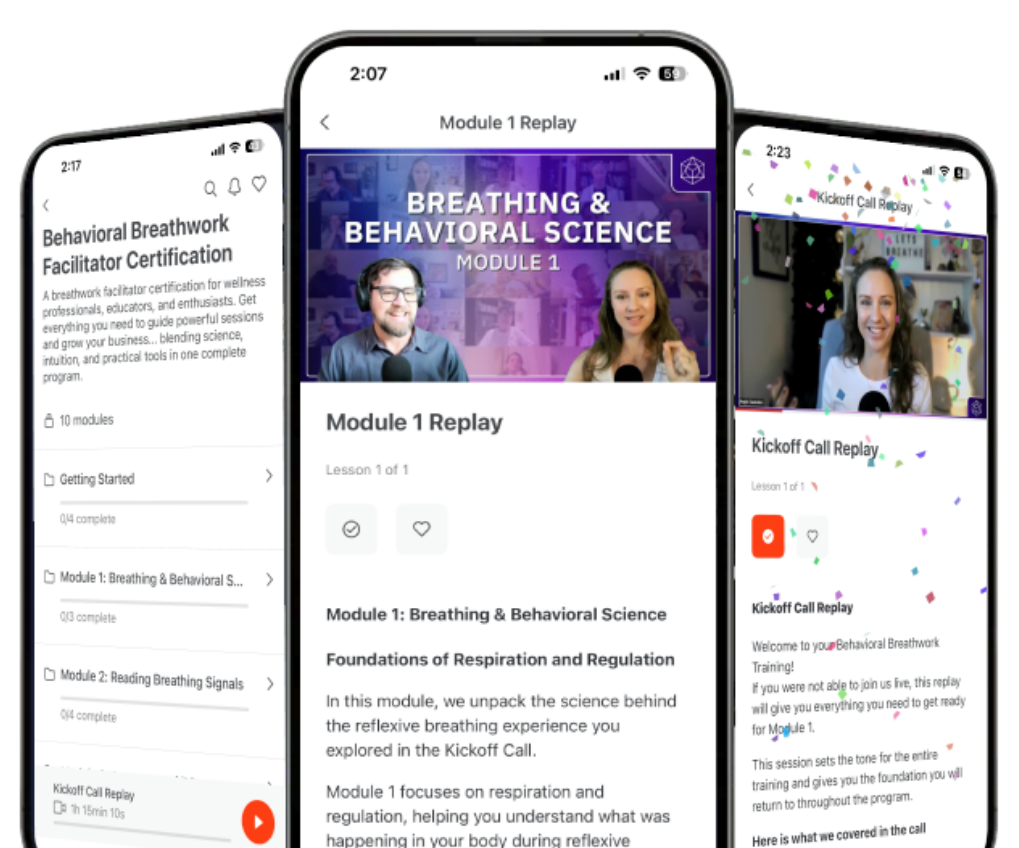
This is what we teach inside Behavioral Breathwork Training.

It’s not about forcing an outcome.
It’s not about performing a technique perfectly.
It’s about learning how to work with the system so it can regulate naturally, without you having to think about it… in any situation.
And when that happens, you are far more available to clear thinking and that inherent wisdom that is already there.
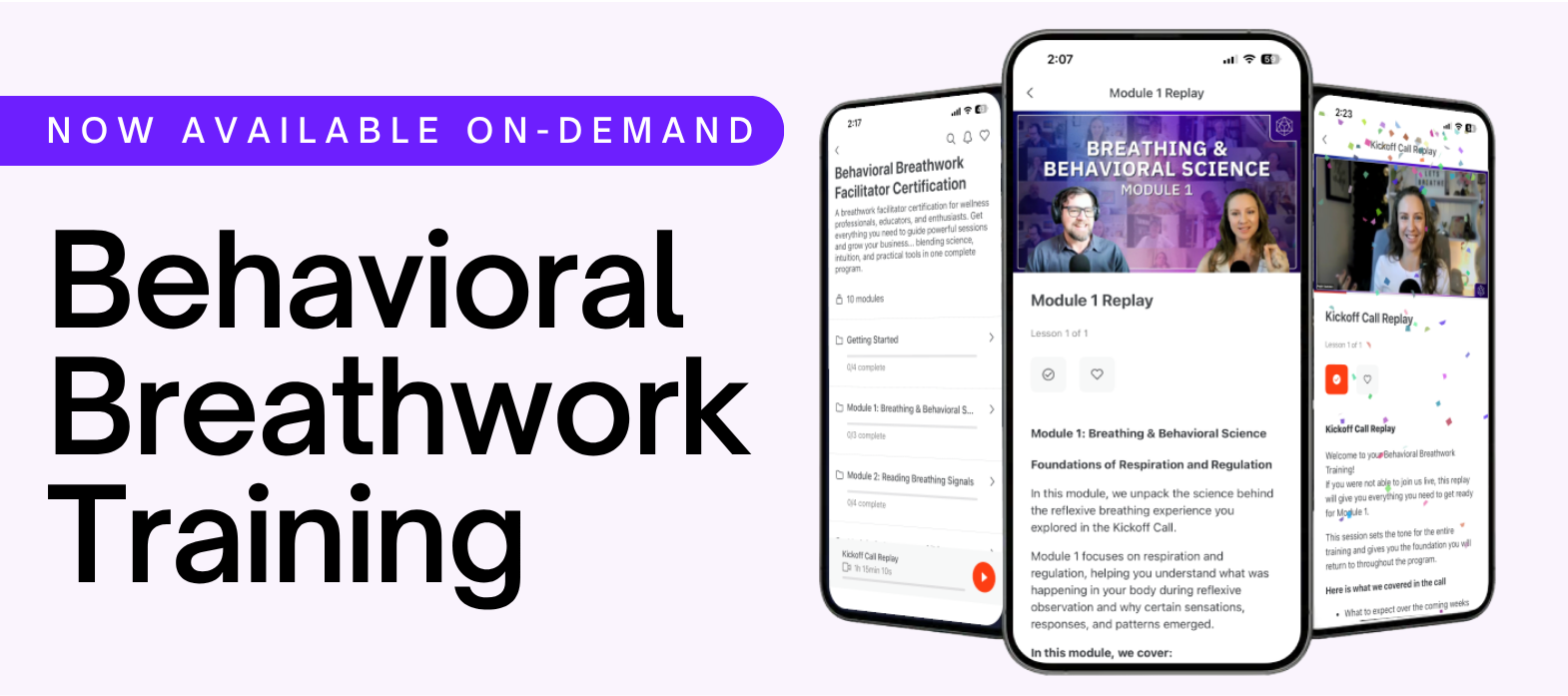
If you’re ready to apply this in your own life or in the work you do with clients, our Behavioral Breathwork Training is now available on demand.
If this conversation speaks to you,
explore our Behavioral Breathwork Training!
We teach the behavioral science behind breathing as a learned experience so you can understand how to work with it and regulate through real life.
Begin your personal journey
🔗 Start the Free 7-Day Experience
If you’d prefer to begin with a simple personal experience, you can start with our free 7-Day Reflexive Breathing Experience.
It’s a short guided exploration to help you notice how your own breathing patterns respond to stress and settling.
KEYNOTES, WORKSHOPS, & PODCASTS
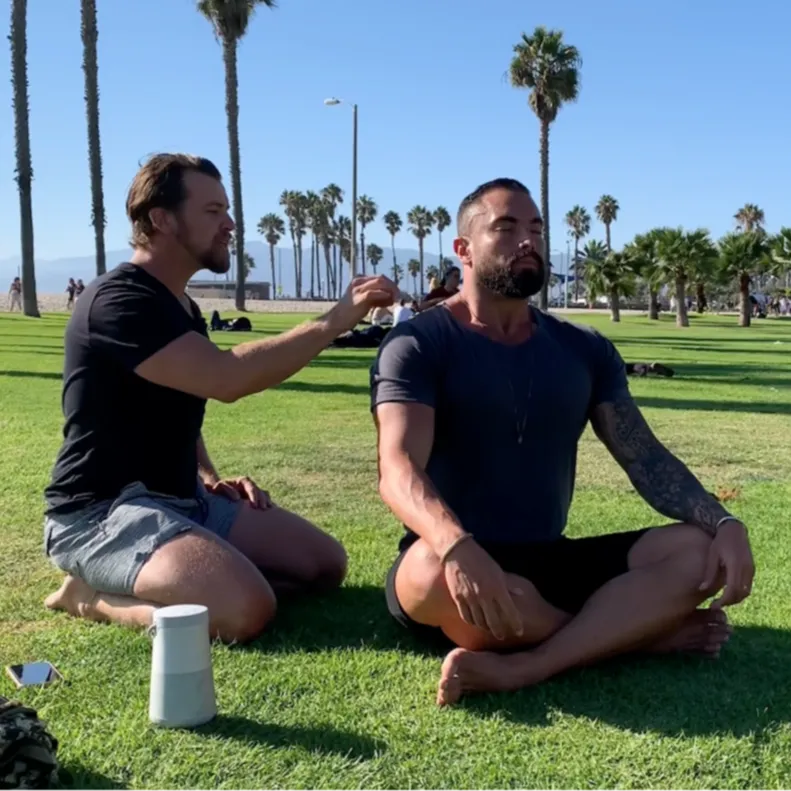
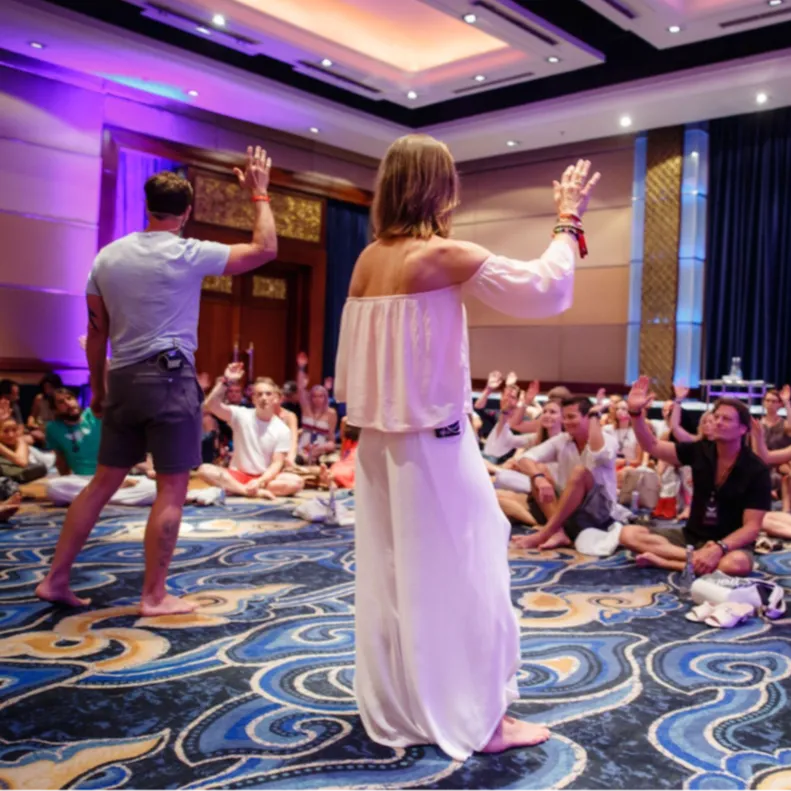
🔗 Book Shane and/or Angie For Your Next Event
We offer workplace keynotes and trainings grounded in behavioral science and breathwork, helping teams understand how stress develops as a learned response and build practical regulation skills they can use immediately.

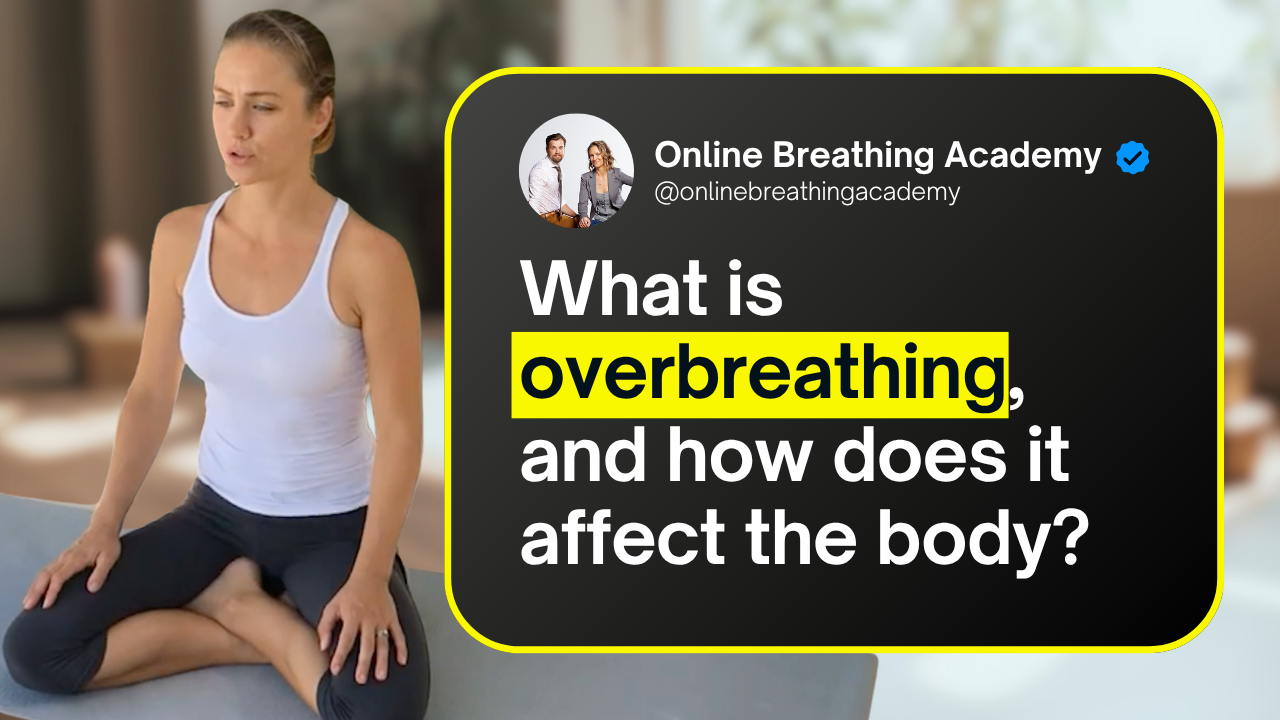
Missed a Newsletter? Catch Up Anytime!
If you’ve recently joined or just want to revisit past insights, tools, and breathing practices... we’ve got you covered!
👉 Browse All Our Previous Newsletters Here


Responses