
A question that really got me thinking this week…
This is our first newsletter of the year.
We intentionally stepped back in December and throughout January.
That time was about home and family.
Fewer outward commitments.
More time to reflect and reconnect (I highly recommend it!).
As we move into 2026, and as the Lunar New Year begins,
We’re excited to be back here with you!
These newsletters are where we get to share more than we can on social media... More context....
More of the conversations and questions that influence what we share behind the scenes.
If you’re reading this…
You’re part of that inner circle that gets to explore the deeper meaning behind this work.
Recently, a client in our Behavioral Breathwork Training, who works with babies and toddlers, wrote to me with a question that has really got me thinking this week...

She was noticing a lot of intensity in the children she works with…
Big emotions.
Anxiety.
Long moments of dysregulation.
She was trying to understand where this behavior begins and how she could support these kids more effectively.
She wondered whether something deeper was being passed on...
Whether a child’s nervous system baseline is inherited from the adults around them, especially the mother.
This is such a great question… and one I am passionate about!
It’s an understandable place to go when you want to help the children around you, whether they’re babies, toddlers, teenagers, or anyone in your care.
What that conversation opened up was not an answer about inheritance,
but a much more accurate understanding of learned behaviors.
And that conversation sits at the center of this week’s newsletter.
Grateful to have you a part of our community,

Featured Insight of the Week...
Is a mother’s nervous system passed down to her child?
The nervous system isn’t something we pass down fully formed.
It develops through experience. It is a learning system.
Before birth, babies aren’t copying breathing patterns or nervous system responses.
They’re regulated through placental exchange and buffering systems.
Breathing behaviors and respiration, as we teach them, aren’t yet part of the picture.
After birth, learning becomes much more direct.
Babies and young children learn regulation through what they’re around.
Through rhythm.
Through tone of voice.
Through touch.
Through how stress is handled in the environment around them.
What gets passed on isn’t vagal tone or carbon dioxide levels.
It’s context.
For example…
How tension is held.
How quickly things escalate.
How others cope with intensity.
How often settling happens after stress.
This is what we call co-regulation.
This is why a child can feel settled in one environment
and overwhelmed in another.
The physiology adapts to what it experiences...
this is called State Dependant Learning.
When someone around us is stressed,
our body and breathing respond before we think about it.
Much of this happens below conscious awareness.
And it’s in these moments that regulation is learned, not taught.
What matters isn’t avoiding activation.
It’s learning adaptability & flexibility.
The ability to move through stressful states and
find our way back to regulation.
If you’d like to explore this more deeply,
we’ve expanded on this idea in this week’s blog.
This week in Behavioral Breathwork
What It Takes to Facilitate a Successful Client Session
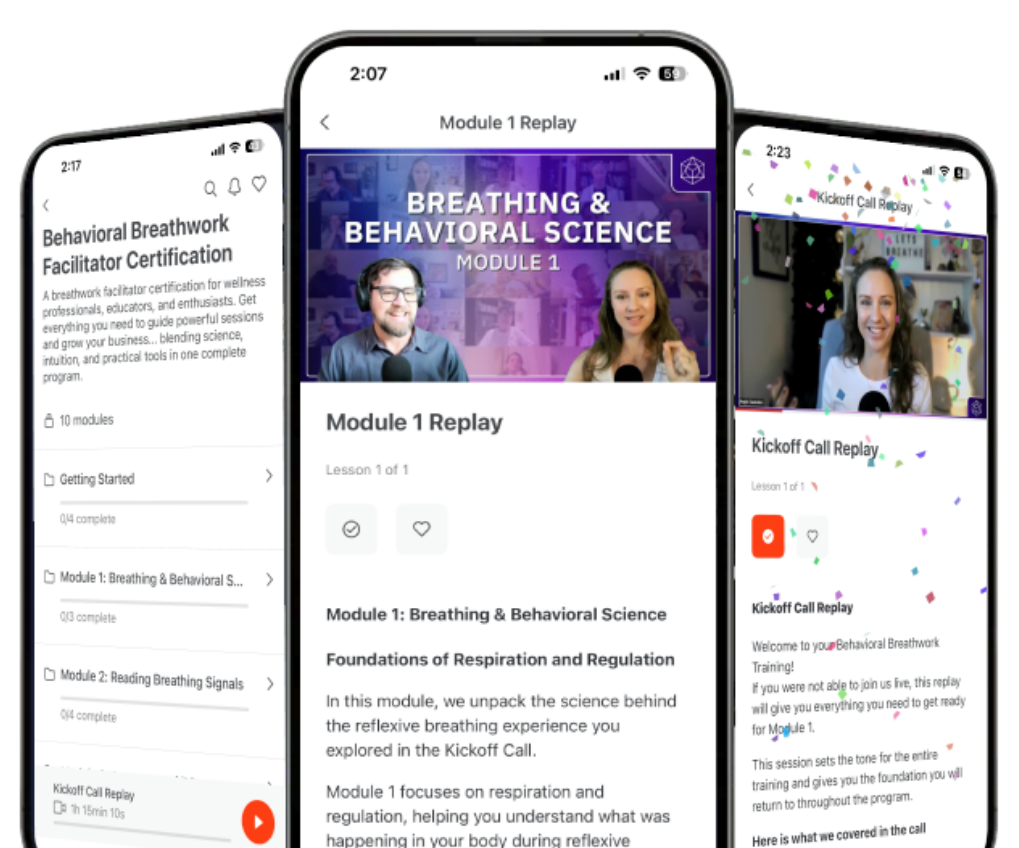
This week inside the Behavioral Breathwork Training, our focus was on one-to-one client sessions.
We looked closely at what it actually takes to hold a steady container when working with another person.
Not through techniques or scripts,
but through our own state and how we show up with the client in front of us.
Up until now, the training has been largely inwardly focused.
Learning to recognize our own patterns.
Feeling what regulation and dysregulation feels like in our own bodies.
This week was about bringing that awareness into a one-to-one client setting.
I’ve been deeply moved by what has been unfolding in these sessions. Facilitators have been guiding partners, family members, and clients through this work, and I’m in awe of how small moments of awareness are opening the door to meaningful change.
We shared our blueprint for working with clients in a way that stays grounded, responsive, and flexible.
A structure that helps you avoid over-explaining, fixing, or rushing toward an outcome.
One that leaves space for clients to notice, name, and learn from their own experience.
A big part of the conversation was self-awareness.
For ourself and for our clients.
Knowing what we bring into a session.
Our habits.
Our tendencies.
Our urge to help, explain, or solve.
And learning when restraint is the more supportive choice.

This work asks us to do it ourselves first. Again and again.
Because the quality of our presence often has more influence on a session than anything else.
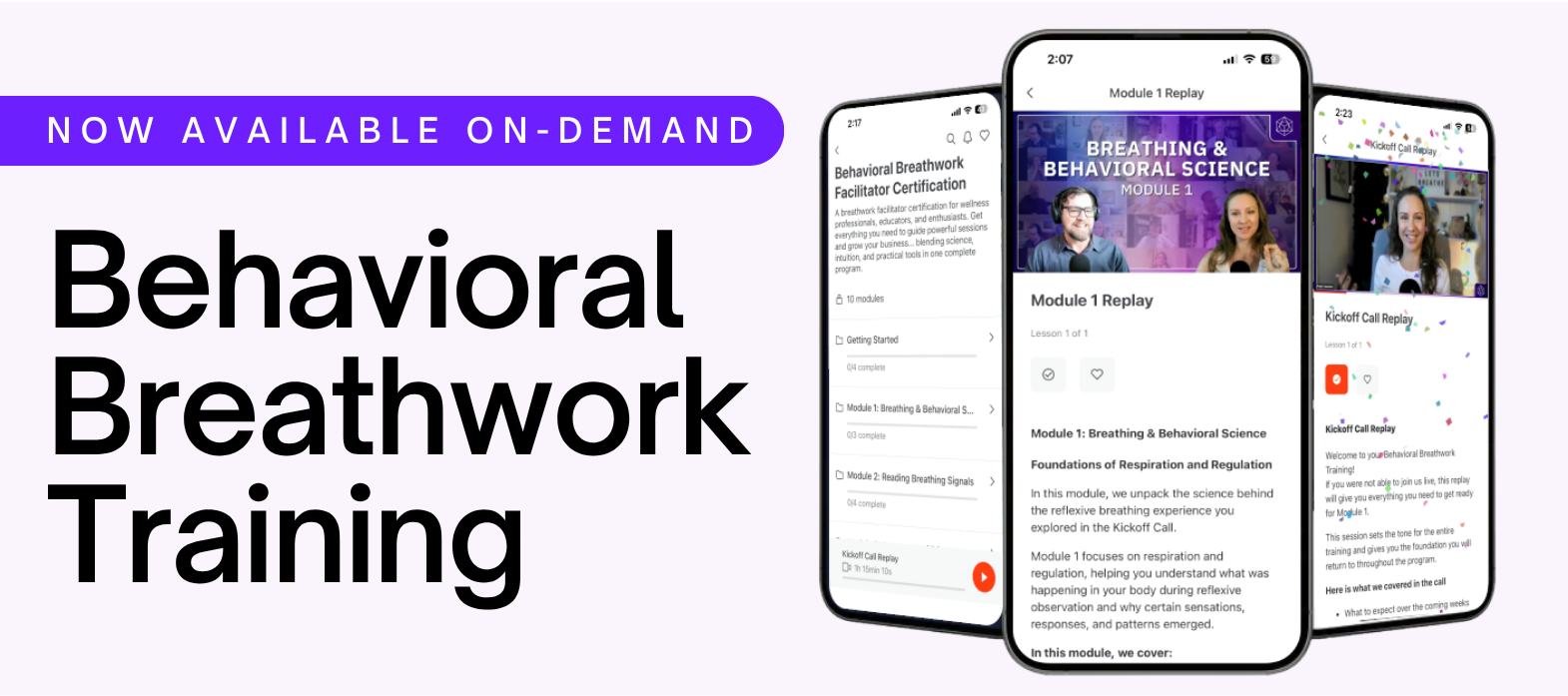
If you’d like to learn how to guide one-to-one sessions using this framework, you can access the Behavioral Breathwork Training now.
If this conversation speaks to you,
explore our Behavioral Breathwork Training!
We teach the behavioral science behind breathing as a learned experience so you can understand how to work with it and regulate through real life.
Begin your personal journey
🔗 Start the Free 7-Day Experience
If you’d prefer to begin with a simple personal experience, you can start with our free 7-Day Reflexive Breathing Experience.
It’s a short guided exploration to help you notice how your own breathing patterns respond to stress and settling.
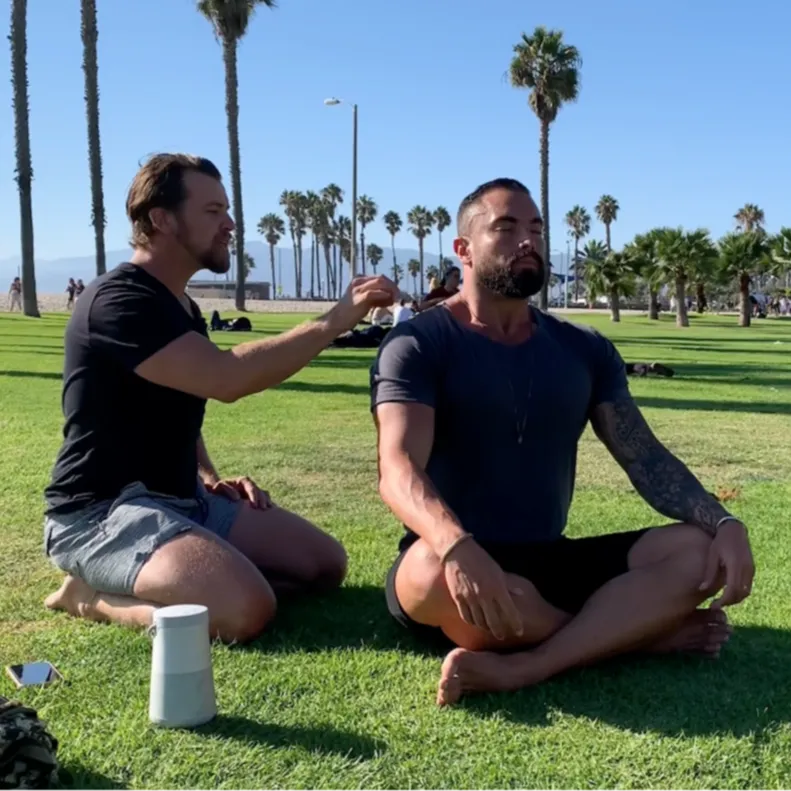
KEYNOTES, WORKSHOPS, & PODCASTS
🔗 Book Shane and/or Angie For Your Next Event
We offer workplace keynotes and trainings grounded in behavioral science and breathwork, helping teams understand how stress develops as a learned response and build practical regulation skills they can use immediately.

Missed a Newsletter? Catch Up Anytime!
If you’ve recently joined or just want to revisit past insights, tools, and breathing practices... we’ve got you covered!
👉 Browse All Our Previous Newsletters Here

Responses